


Note: I’m starting a new series called This Week in AI Tea. It’s AI news with hot takes, basically, everything you need to stay sharp at work without reading 400 LinkedIn thinkpieces.
The moment I read my ninth “AI-Native-First-Accelerated-Frontier” term in a single paragraph, I knew the industry had officially lost the plot. Meanwhile, some of us are trying to figure out how to actually use AI at work without turning into a walking Gartner report.
This matters now because:
2026 AI planning is full of buzzwords
Teams don’t need more AI jargon, they need working examples
Most AI talk still produces nothing usable
In this post you’ll get:
The one metric that actually matters
A story from inside my own AI leadership experience
A simple way to filter real experts from enthusiastic parrots
Let’s detox.

We Shut Up, Opened a Laptop and Built Something Useful
A few months ago, I was attending a conference with a project manager from my team who recently returned from maternity leave. The day was full of “AI-first operating models,” “AI-native workforce evolution,” and “accelerated transformation layers.” Lots of confident language. No clear definition of the work.
My project manager quietly whispered over our sandwich lunch that she felt she had “missed the boat” because everyone sounded so far ahead in AI.
It’s one thing to sound ahead, and it’s another to actually be ahead. So we opened a laptop and built something useful.
I asked her one question: “What problem needs to be solved?”
After a few minutes of thought, she revealed some of our junior team’s social media copy sounded too much like AI and she worried it would hurt us with clients.
So we built a custom GPT for the team on the spot.
We listed what makes a social post good.
We listed what makes it sound artificial.
And we tied that up with a nice pink bow by adding a three-voice debate mechanism to sharpen the tone before approval.
I’ll share a little part of the instruction so you get the idea:
Analyze and refine the social media text below through a three-voice debate: supportive, frustrated, and creative final judge.
The team now uses this GPT every day. A small win, but what used to take 2-3 rounds of edits now takes one. On average, they save ~2,5 hours per week per copywriter and the posts finally sound human again. Even our project manager’s face looks smoother these days, which is basically a KPI at this point.
Now imagine building one of these every week.
Companies love overestimating “AI strategy” and underestimating what consistent, basic AI literacy across a team can do over a year.
Most AI Strategies Are Theater
I didn’t plan to turn this into a mini case study, but I opened Forbes this morning, saw Paul Baier’s new article, and it clicked instantly with what happened that day in the meeting room. His opening argument mirrored exactly what I’ve been seeing for months.
Baier doesn’t waste time:
“Forget AI-First vs. AI-Native. The only metric that matters is revenue per employee.”
And suddenly the jargon storm from that conference made sense. People were debating identities rather than impact.
Baier’s point is blunt, If AI doesn’t improve output, efficiency, or speed, then it’s branding. Not strategy.
Here’s the short version of his argument and why it matters for every team trying to build something real:
Start with workflows, not labels.
Identity debates (“AI-Native,” “AI-Accelerated”) don’t change work. Defining the actual workflow does.
Measure the delta, not the tools.
Improvement = hours saved, output improved, cost per task reduced. Not how futuristic the terminology sounds.
Ask for evidence, not adjectives.
A credible AI project shows before/after impact. Everything else is opinion.
Execution beats vocabulary.
Teams that prototype and implement — even small things — will always outperform teams polishing their language.
Baier’s lens puts everything back into focus: Real transformation is built, tested, and measured. Not named.
Stop ‘Exploring AI.’ Automate One Damn Thing
Pick one task you touched in the last hour and ask yourself:
“What part could AI automate?”
Test one piece now.
Document the before/after.
Done.
In the comments tell me this:
What’s the most ridiculous AI term you’ve heard this year and did you figure out what did it actually mean?
During the creation of this post I used Claudia Faith’s prompt from her article entitled Spending Hours Outlining Your Posts? This Free Prompt Cut My Prep Time from 2 Hours to 10 Minutes published on The AI Soloist.
I will be sharing my review on the prompt in my next Prompt Review post. Until then check out my last prompt review:

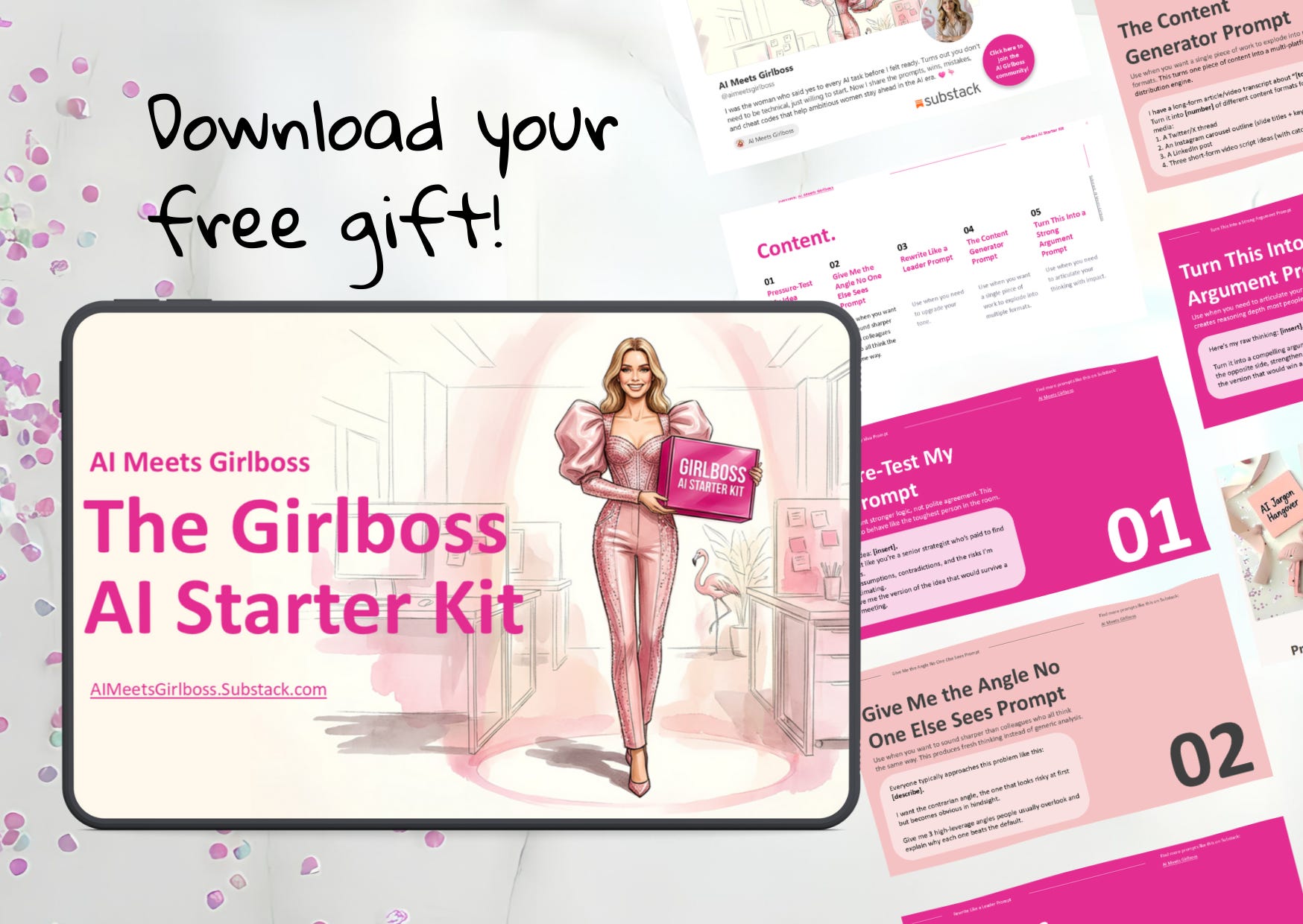
P.S. Want the Girlboss AI Starter Kit?
Five elite-level prompts built for women who want to use AI in a smart, strategic way — debating, refining, and building. Subscribe to my channel or slide into my inbox with GLOW and I’ll send it your way.
Later Girlbosses!
Pinkie out.
You're right. I do love this post!
- signed, tired mama, just getting thru all her substack saves
Good hell. I loved everything you said here.
As someone who is self-taught-pretty-much-everything and does not sit on board rooms with suits, I fortunately only witness this phenomena online and from a safe distance.
The hype is real. The buzzword pissing contest is even more real.
While it all seems cool, having fancy words means nothing if you can't actually do anything of merit.
Walk the walk. Don't just talk the talk.
Also, maybe let's talk like normal people and not have an ever growing vocabulary to make ourselves feel cool/better than others? Maybe we just do the damn thing and teach people? Share the knowledge? Not just parade around on tech jargon?